

Claire J.
Week of November 13th
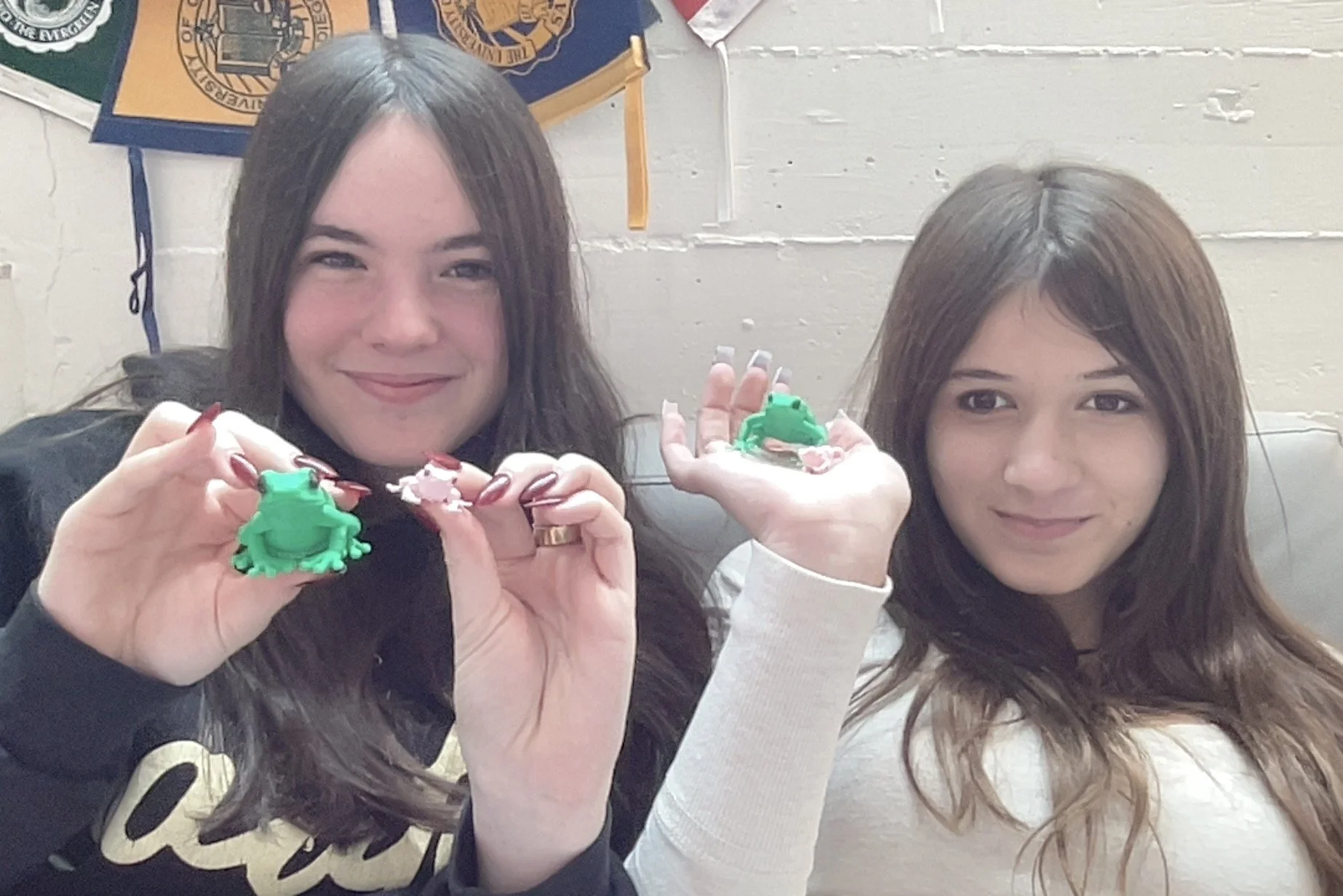
This week we decided on which frog. We have decided on the Dendrobates tinctorius. We also made 3rd printed models of what the frogs would look like. Here are the 3rd printed frogs:
We also figured out what we are going to do for our lab
Lab idea:
The Genetics of Coloration and Pattern Inheritance in Dendrobates tinctorius
To what extent are genetic variations associated with differences in coloration and pattern among adult Dendrobates tinctorius?
What to do:
Select adult frogs with different colors and patterns.
Photograph and document their physical characteristics.
Collect DNA using an approved non-invasive method.
Use PCR and DNA sequencing to investigate selected pigmentation-related genes.
Compare genetic differences with observed color and pattern differences.
Results: We would determine whether particular genetic variations are associated with specific coloration or pattern characteristics.
How accurately can parental genetic information predict the coloration and patterns of Dendrobates tinctorius offspring?
What to do:
Use the genetic information from Part 1 to make predictions.
Document the offspring's colors and patterns after metamorphosis.
Compare their characteristics with your original predictions.
Evaluate how accurately parental genetics predicted the offspring's traits.
We decided to do this for our lab because we are very interested in how the genes correlate with color and pattern.
Week of November 6th
I researched both of the frogs and made a checklist to check which is the best for our project.
Dendrobates tinctorius:
My requirement Assessment
Color variation Excellent
Pattern variation Excellent
Genetics research Strong potential
Captive breeding history Established
Beginner suitability Requires preparation
Low daily supervision Not something to assume
Dendrobates auratus:
My requirement Assessment
Color variation Excellent
Pattern variation Excellent
Genetics research Potential
Captive breeding history Established
Beginner suitability Good
Low daily supervision Stronger published research
Week of October 30th
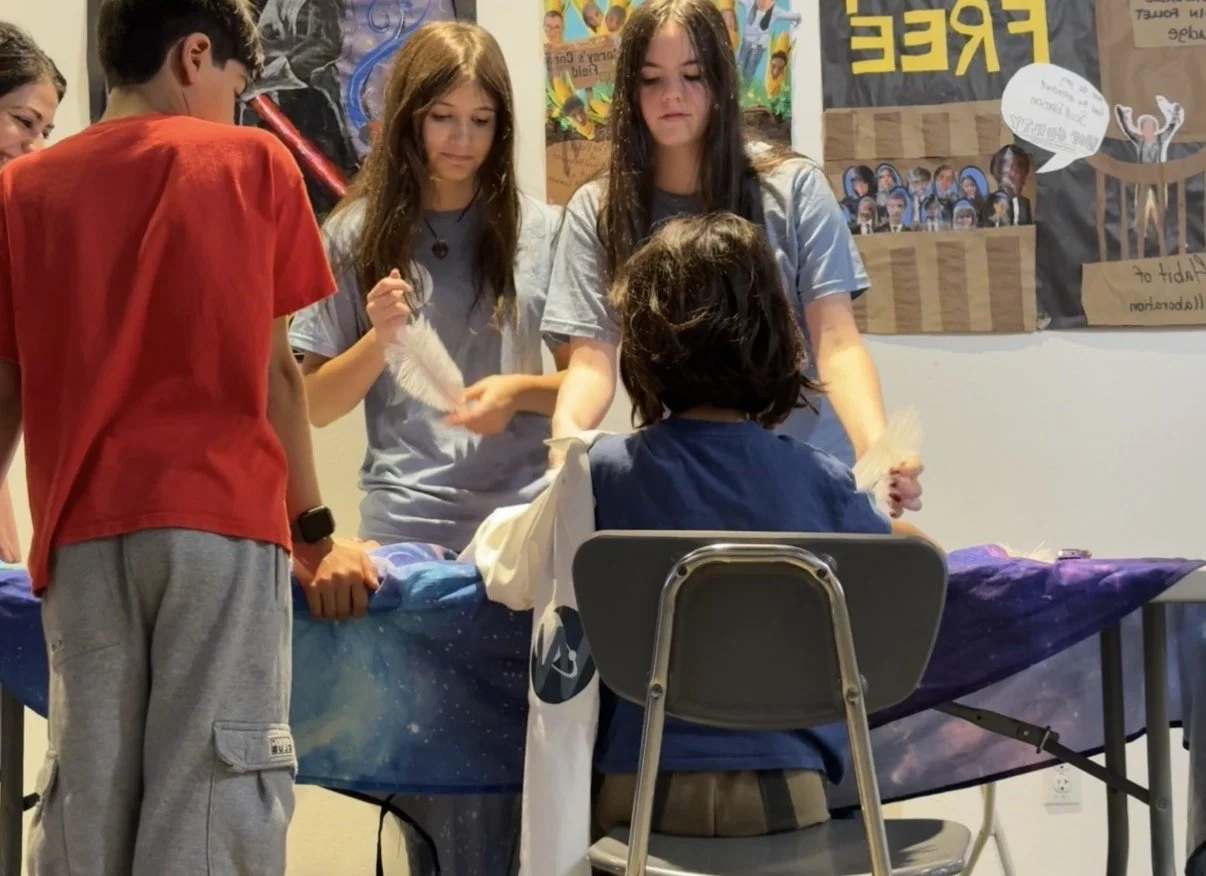
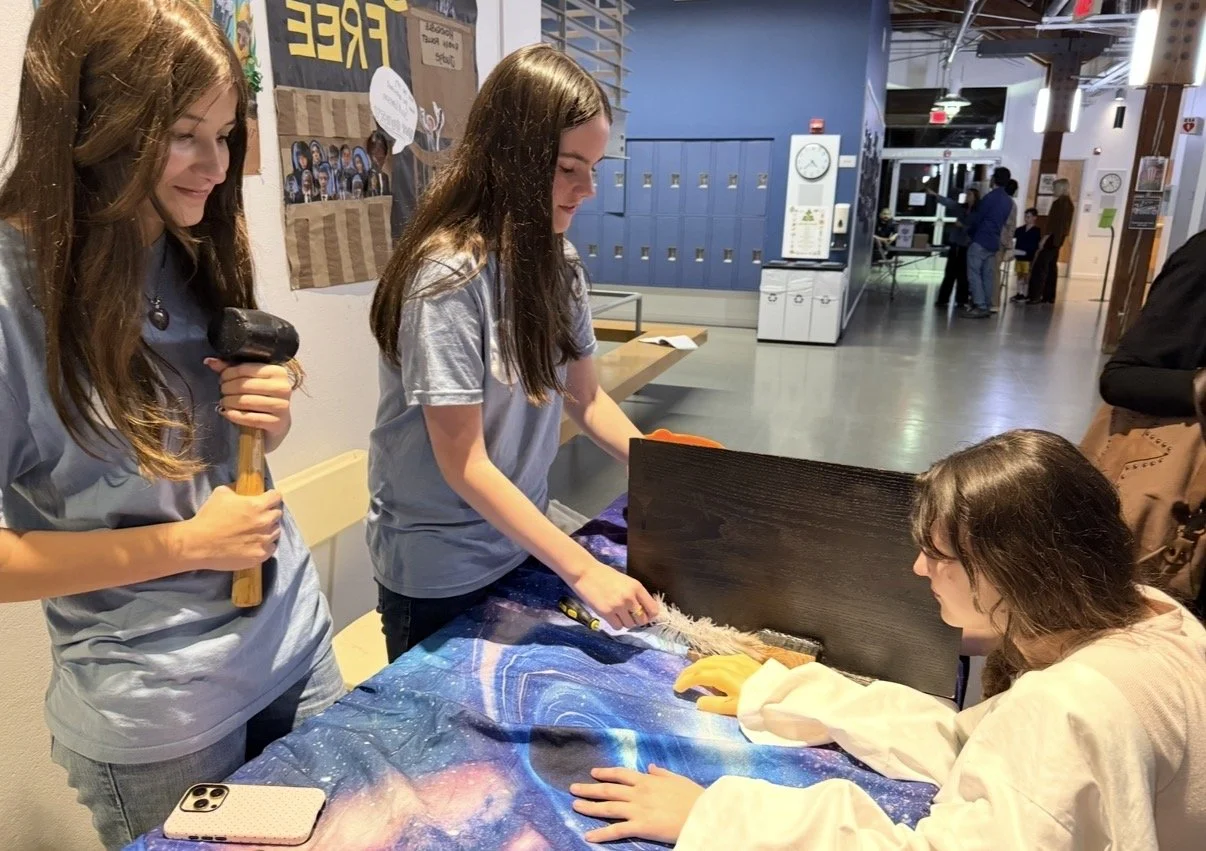
Phoebe and I presented our Rubber Hand Illusion at Dark Matter Day. Before it started, we researched our topic and why it happens; this is what we found:
Dark Matter Day Research
Phantom pain is when you feel pain in a part of a limb that was removed after an amputation.
There are different types of phantom pain, and it is not always pain. It can be things like burning, pressure, itching, temperature, or any sensation.
A way to relieve this pain is to use a mirror to reflect your missing limb, which tricks the brain into thinking it is still there. Then, you can itch yourself or relieve the phantom pain. This is similar to how this trick works: it tricks your brain.
Here is some photos of us on Dark Matter Day
Week of October 23rd
Phoebe and I created our Dark Matter Day poster. We are doing the rubber hand illusion. We have all of our materials for it and will test it out during lunch.
Week of September 18th
This week I worked on my Inquirer pitch. I developed an idea which is: the physics of cats and found a source on it: https://www.nature.com/articles/s42254-025-00824-6.
This is what I wrote for my pitch:
I want to write my inquiry article on the physics of cats. I would like to determine whether cats defy the laws of physics, whether they can be considered a liquid and why, and how they use their bodies differently than we do. This topic is important because learning how and why things happen in the world can help us make connections and discover new things that we haven’t considered before. In my opinion, as a human, cats are very interesting animals, both psychologically and physically. I will get my information from both second-hand and firsthand sources. Since I own two cats, I can observe them, conduct safe experiments, and analyze how they act and move. I will also use information and data already available online to further my research. I think I am the right person to write this article because I have a lot of experience with cats. Throughout my lifetime, I have owned about 15 cats, so I am very familiar with their behavior. I also really enjoy physics because, to me, it is one of the most important subjects to learn when trying to understand how the world works.
Week of September 4th
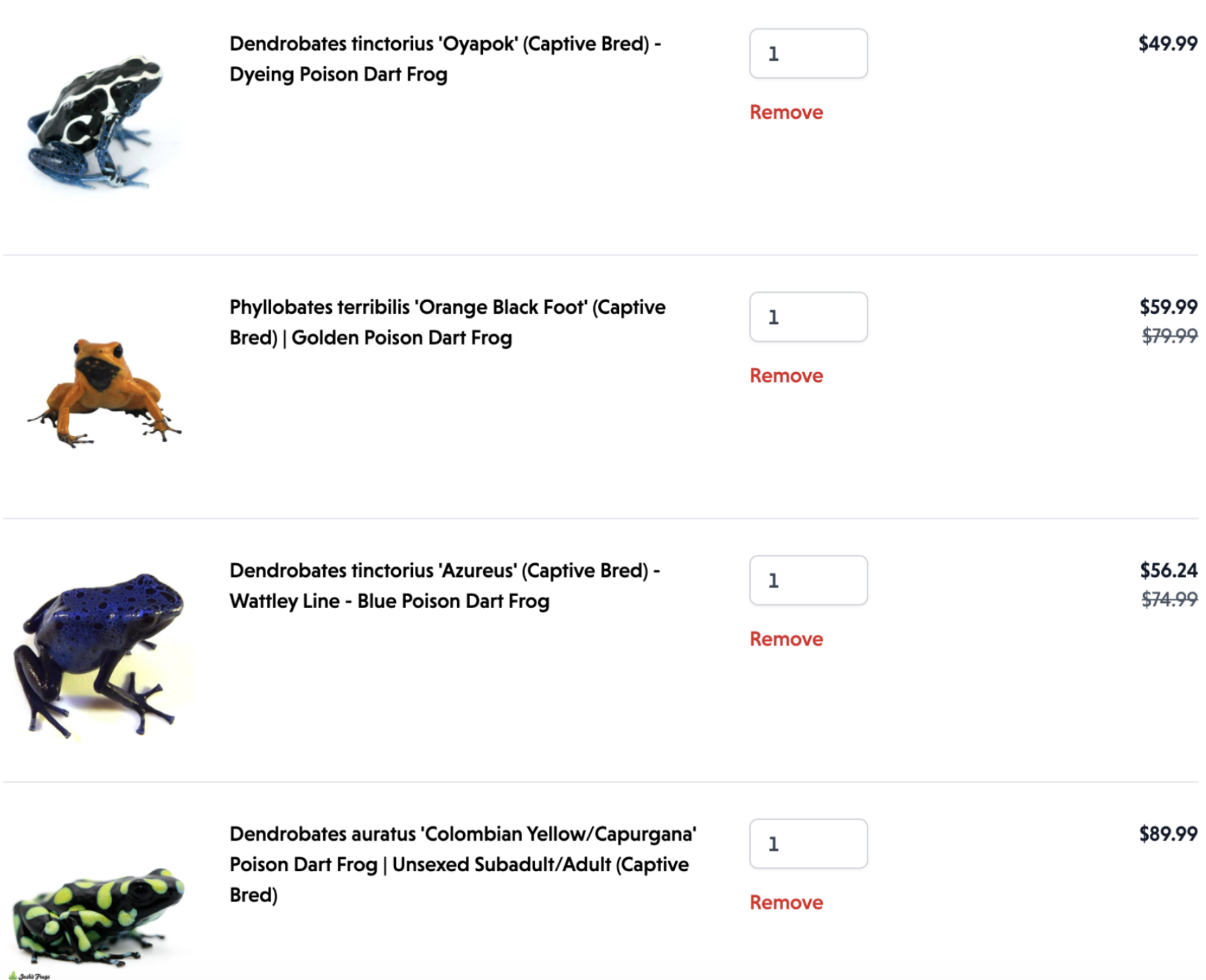
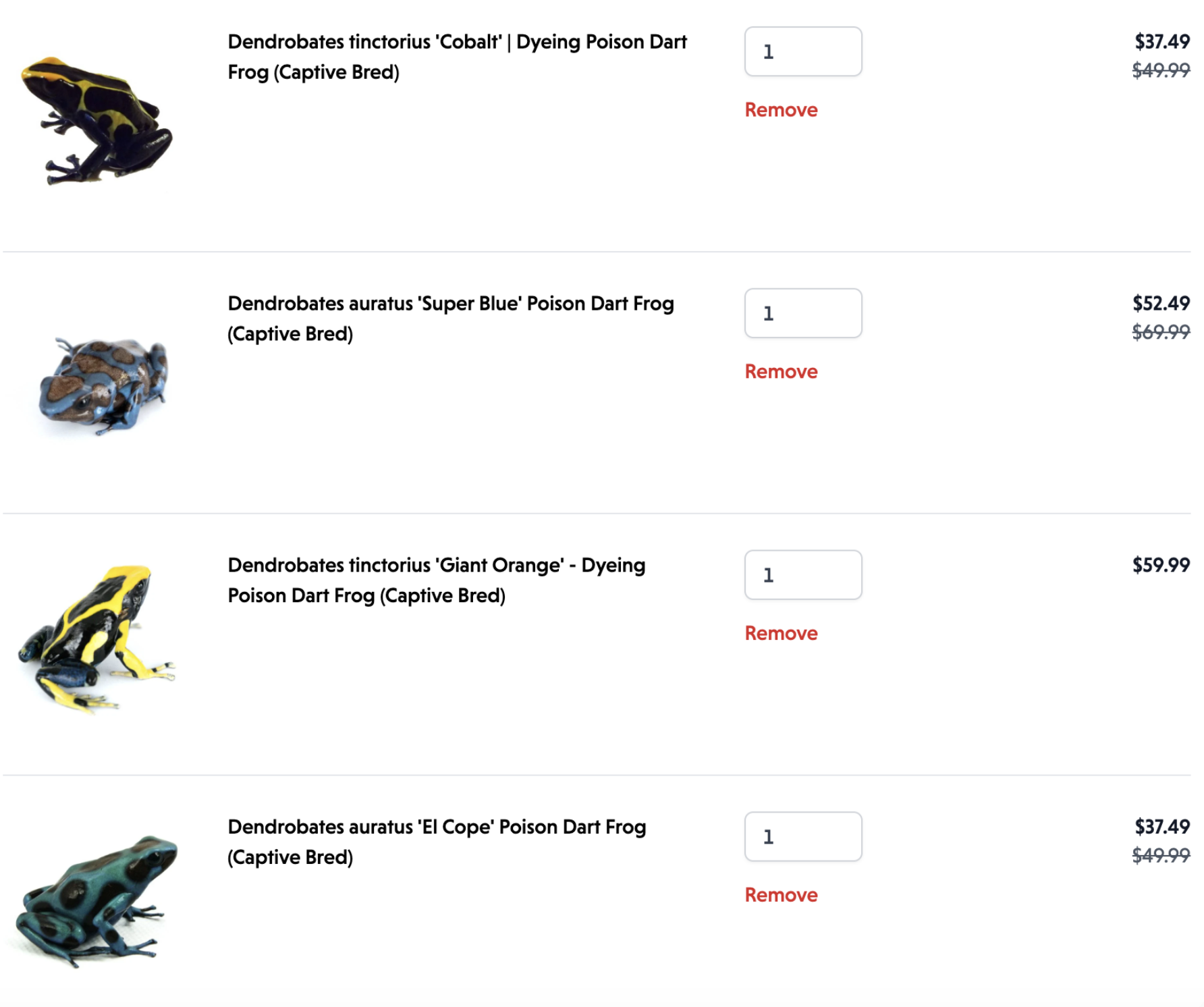
This week I looked at the store to see all the different frogs:
I also found some new links/research stuff:
Dendrobates auratus
Dendrobates tinctorius
https://exo-terra.com/explore/care-guides/frogs-toads/dendrobates-tinctorius/
https://www.zoonewengland.org/stone-zoo/animals/reptiles-amphibians/dyeing-poison-dart-frog/
Week of August 28th
This week I worked on finding what I was going to do for my project. Phoebe and I decided that we wanted to do something relating to animals. At first, we wanted to work on bunnies or hamsters and test on them humanely; after talking with Megan, we realized that wasn’t an option, so we decided to work on frogs instead. We researched them and found that the best frogs for us would be Poison Dart Frogs, either Dendrobates auratus or Dendrobates tinctorius; we still haven't decided. This is what we have researched so far:
Poison dart frogs
Amount: idk yet
Food: Ants
Breeding conditions:
Habitat:
Dendrobates auratus vs Dendrobates tinctorius
Dendrobates auratus
Smaller - around 1-1.6 inches
Peaceful and can easily be kept in groups or trios
More agile and semi-arboreal.
Skittish, reclusive, or shy
Pros for auratus
Peaceful and can easily be kept in groups or trios
prettier(for the most part)
Cons for auratus
Skittish, reclusive, or shy
May eat the eggs
Smaller and could escape more easily
We still need to find out what we are going to use the frogs for
First Week/Couple of Days of WISRD
This week I have not decided what I want to do yet. I have learned about other people’s projects and have somewhat of an idea of what I would want to do, maybe. I would like to do something with animals, and I realized that we can work with people outside our Block, so I will probably work with Phoebe. I can’t wait to start this journey. I think it will be very fun and exciting!
Dendrobates tinctorius
Bigger - around 1.25-2.5 inches
Highly territorial, especially the females
Primarily ground-dwelling frogs
Extremely bold, often out in the open and visible
Pros for tinctorius
Extremely bold, often out in the open and visible
Bigger
Cons for tinctorius
Highly territorial, especially the females
Sometimes they wrestle, usually same sex but sometimes can be female and male